When the economy tightens, margin doesn't come from price. It comes from productivity.
The economic picture ahead squeezes margin from both ends: costs and taxes rise while demand softens and competition keeps you from passing anything into price. That leaves one lever under your control, and it's exactly the one most companies leave untouched.
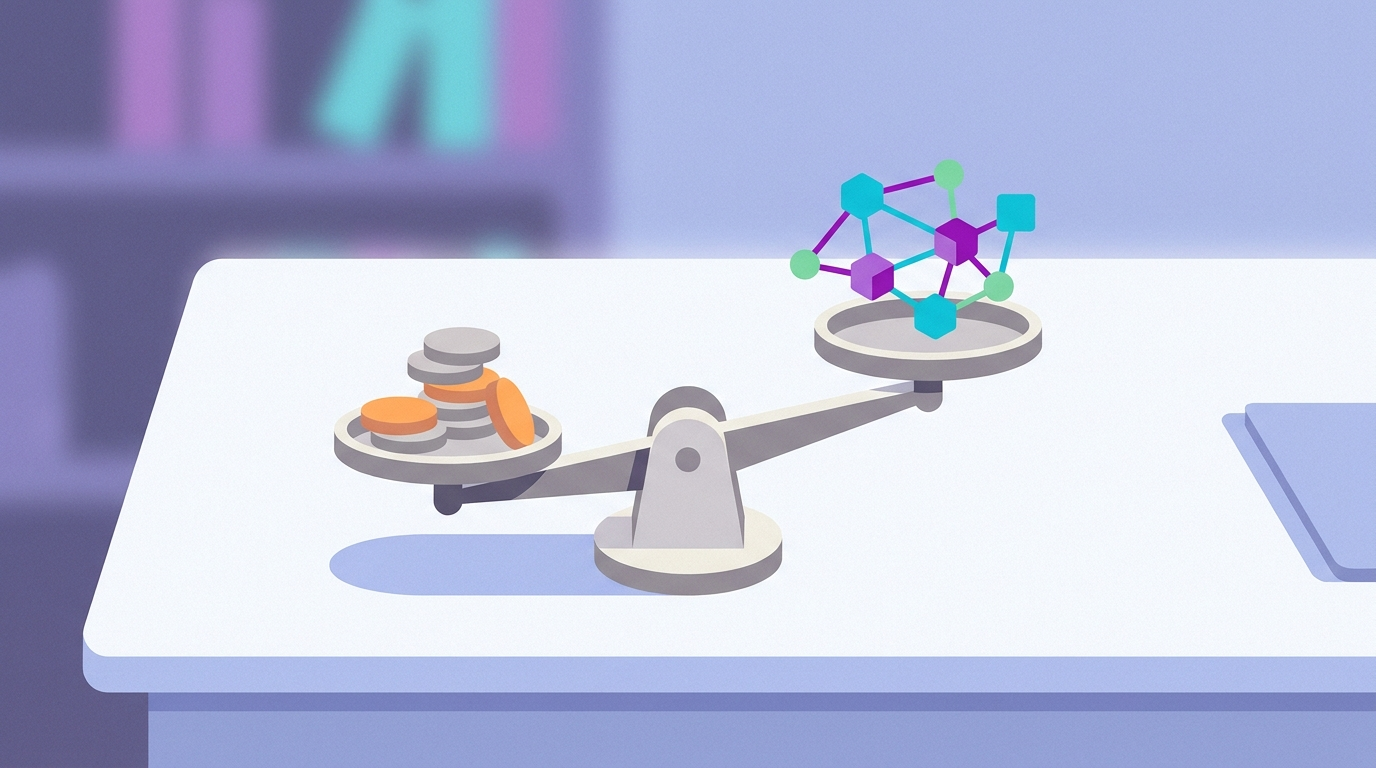
From the seat of anyone running a company, the economic picture shaping up for the next few years has a single name: pressure on margin.
On one side, costs are rising. Taxes, inputs, payroll, all pushing the cost base up. On the other side, demand softens and competition keeps you from passing anything into price. Margin gets squeezed from both ends at once.
The most common reaction to this picture is to wait for it to improve. It's also the most expensive.
The one end you control
Look at what's actually in your hands.
You don't control demand. You don't control the competition. You don't control the price the customer will accept, or the tax rate a government sets. Those are the variables squeezing your margin the hardest, and they're exactly the ones you don't decide.
That leaves a single variable under your direct control: the cost to operate. Delivering the same thing with fewer hours, less rework and fewer errors. It's the lever you move on your own, and it's precisely the one most companies leave untouched, because it's less visible than a price change or a round of layoffs.
The math is uncomfortable
The calculation fits on one line:
If costs go up and you change nothing else, your margin goes down. Full stop.
To bring the margin back, there are only two paths.
The first is to raise prices. In a tight-demand, high-competition environment, the customer won't let you. Passing cost into price today usually means losing volume, which makes the math worse instead of better.
The second is to lower the cost to operate. For most companies, the biggest pocket of avoidable cost isn't the energy bill or the rent. It's repetitive work that no longer needs a person doing it by hand.
Where the margin is leaking
Stand in front of any operation and you'll find the same tasks eating expensive hours from qualified people:
- support triage and replies that always follow the same script;
- generating proposals, contracts and reports from data that's already in the system;
- reconciliation, closing and cross-checking spreadsheets;
- filling in and moving information from one system to another;
- first-line answers to internal questions that are already documented somewhere.
None of these is the work that differentiates your company. All of them are an invisible tax you were already paying before any rate went up.
Agents aren't innovation. They're margin defense.
This is where AI agents come in, and it's worth changing the framing. In most pitches, an AI agent shows up as "innovation": a project for the future, a line in the R&D budget. For the environment ahead, that framing is wrong.
An AI agent is margin defense. It's the lever that gives back what the tighter economy took.
An agent absorbs the repetitive volume described above and returns your team to the work that actually generates revenue. It doesn't take vacation, doesn't make mistakes in the third hour of the night, doesn't land on payroll with all the add-ons, and it runs every time, whether or not someone remembers to ask. Its cost is tokens and infrastructure, measured per task, not a salary carrying every surcharge the same environment makes heavier.
The calculation your finance team should run is simple: take a repetitive process, multiply the monthly hours by the cost per hour, and compare it to the cost of an agent running that process around the clock. In most cases we see, the payback shows up in weeks.
"Isn't this just an elegant way to cut headcount?"
No, and that's the mistake that sinks the operation instead of saving it.
In a crisis, the default reaction is to cut people. It's fast and it disappears from the balance sheet the following month. It also destroys accumulated knowledge, crushes the morale of whoever stays, and when demand returns, leaves you without the hands to meet it.
The alternative is to redirect. Take your team off the repetitive work with agents and point those hours at what the machine can't do: close the deal, understand the customer, solve the hard case, improve the product. You preserve the margin without burning the capacity you'll need when the environment turns.
Defending margin with productivity is the opposite of shrinking. It's making the same structure produce more.
Why this needs a platform, not a chatbot
The natural objection is: "my team already uses AI, we open ChatGPT when we need it." Great for individual, one-off tasks. But defending margin systematically requires the agent to run on its own, in the background, every time. Scheduled, triggered by an event in the ERP, answering a message that landed on WhatsApp. That's infrastructure, not a tab open in a browser. We cover that line in detail in We already use Claude Code and Codex. Why would we need Orkindo?.
And there's one detail finance, of all teams, will value: visible cost. When you put dozens of agents to work, you need to know how much each one consumes, per task and per model, not discover it on the invoice three weeks later. It's part of the platform, and we wrote about it in when the agent costs more than the developer.
The question that separates companies
Most companies will spend the next few months asking how much the environment will cost them. It's a defensive question, and the answer is already set.
The question that separates the companies coming out of the transition with their margin intact from the ones coming out with it eroded is a different one:
What are we doing to win that margin back, before the competitor wins theirs?
If your operation already has three or four repetitive processes everyone knows by heart, you already have the start of the answer. At Orkindo, we help turn exactly those processes into agents running in production, with governance and measured cost, usually within a week.
If you'd like to map where your margin is leaking today, book a call.